

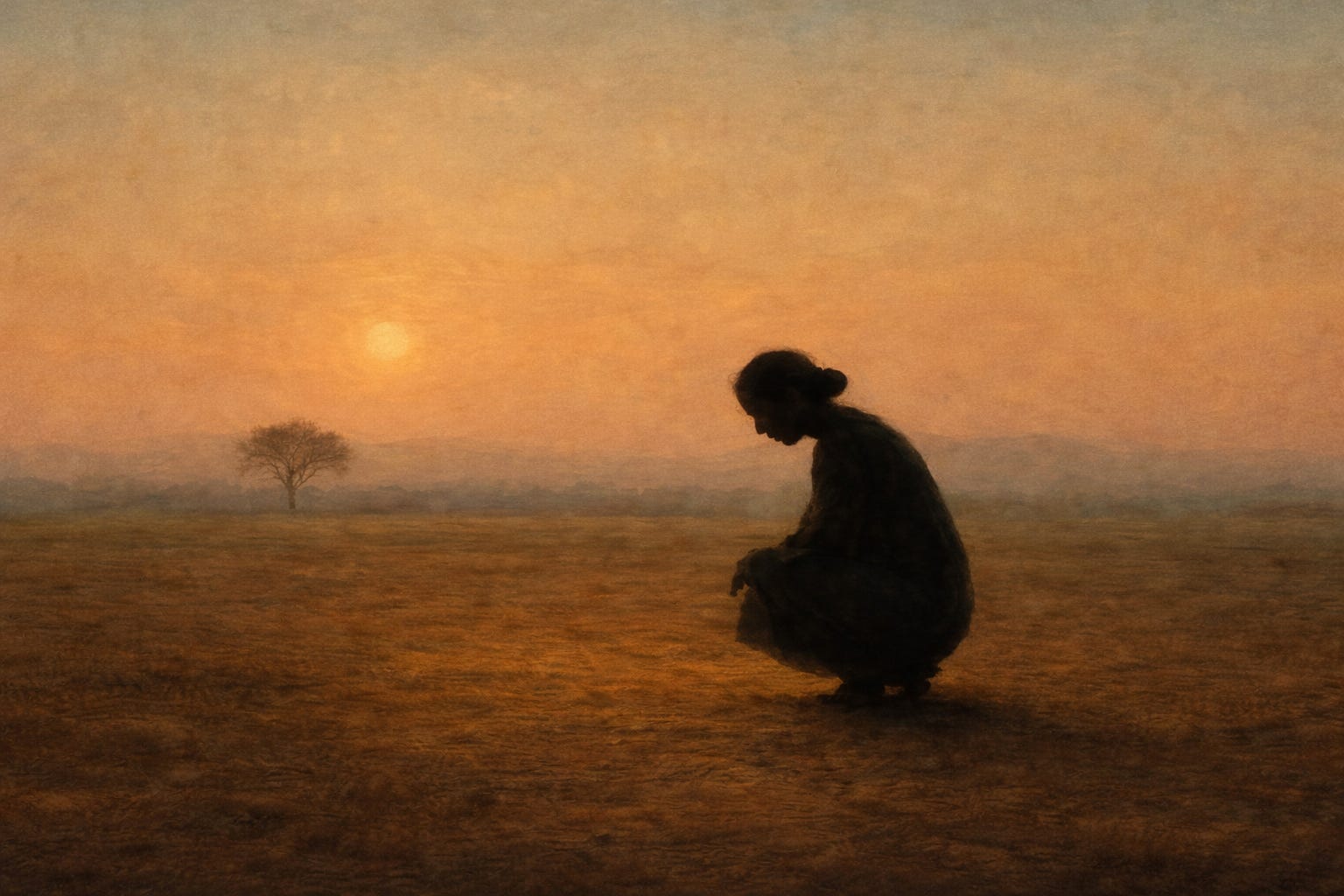
Why the Ground?
Humility comes from the Latin humilitas, rooted in humus — earth, soil, ground. Not a gesture of lowering, but a return to right relationship with what sustains. Earth does not compare or demand. It simply carries. Humility leans toward this simplicity: a quiet descent from constructed heights, a return to what is steady and real.
Loneliness often begins when life rises away from this ground of presence. We rise when image matters more than contact, when composure matters more than honesty, when being above begins to feel safer than being close. From the outside, this can look like strength. From within, it often feels like strain.
The Age of Elevation
The culture praises altitude: climbing, optimizing, advancing. Height becomes a measure of worth. Yet altitude offers visibility, not intimacy; performance, not presence.
As attention climbs, contact with the inner ground thins. Loneliness grows as a subtle dislocation: a life stretched upward, yet hollow at the center. Stillness receives no applause. Humility is not a marketable pose. And upwardness becomes habit, even when the roots feel strained.
The Illusion of Being Above
A quiet urge to stand slightly higher often replaces the desire to be close. This is not strength but distance.
Superiority attempts to mimic security, yet it isolates the one who clings to it. It builds vantage points from which nothing real can be touched. Something softens when we no longer need to stand above. Attention returns to the ground, where worth requires no height.
The Dislocation Beneath Loneliness
Humility is often mistaken for smallness. Its truer meaning is proportion: a self neither exaggerated nor collapsed.
Loneliness takes root when this proportion slips. Clarity blurs, belonging thins, presence drifts. Without earth beneath, the inner life begins to hover, and hovering is lonely. Something returns: weight, contact, a sense of being fully here.
Touching the Earth Again
Grounding begins in the body: breath descending, weight returning, the simple recognition that nothing stands alone. What we call humility may begin here — not in denial, but in arrival.
Loneliness eases when the self lands again.
What Humility Looks Like in Practice
Humility is not performance. It is moving with right proportion — neither inflated nor erased. In practice, it can feel like
listening without bracing
speaking without ornament
loosening the image assumed to be required
receiving support without shame
acknowledging limits without collapse
choosing presence over display.
Often, humility appears in very ordinary moments: when we stop trying to sound more certain than we feel, when we admit tiredness without turning it into failure, when we let ourselves be met without protecting an image. These are small movements, but they return the self to contact with reality.
It softens the inner voice that is always comparing, defending, or trying to appear. It brings life back into alignment with what is real.
Choosing a Grounded Life
Humility is not a narrowing of the self. It is anchoring: a return to what can bear the weight of living.
Humility allows us to show up as we are, without the need for status or pretense.
When true ground is touched, loneliness loosens. Not through rising, but through returning.
Sometimes the most courageous movement is downward: into truth, into clarity, into the earth that fits the feet.
If this reflection resonated, Mindfulness for Loneliness offers a structured guide for working with loneliness more directly — through simple practices and reflections that can make a real difference in how it is met.
📘 Mindfulness for Loneliness: Transforming Isolation into Inner Peace
Continue Reading
If this touched something familiar, these nearby essays continue the thread:


If you’d like to help sustain this space — and the wider work growing from it — you can also do so here.
Glad to hear your impression!
I never knew the roots of ground and humility were so intertwined. I felt a lot reading this piece.