

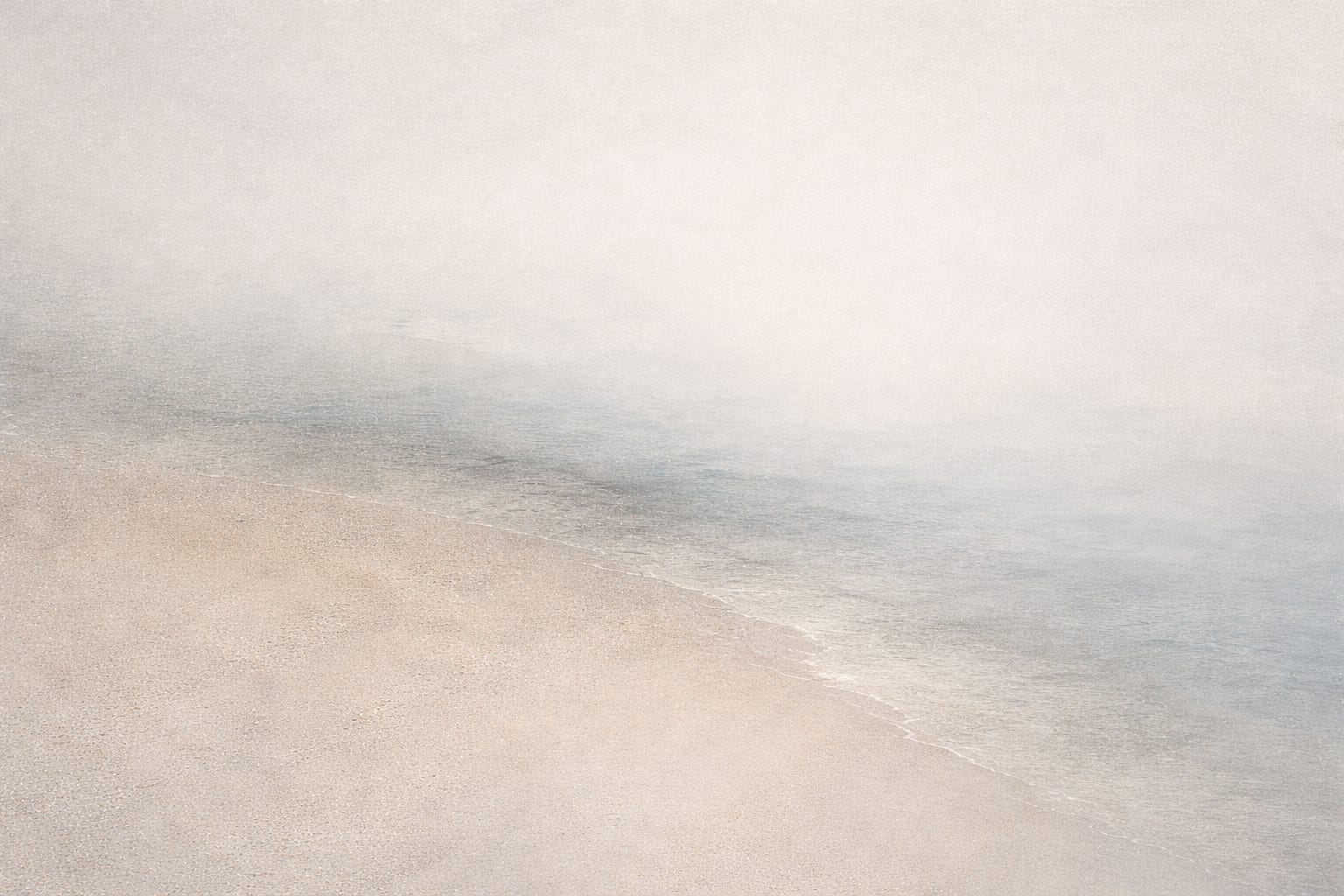
A thinning
Before we took sides, before the world learned to speak in edges and every utterance carried a posture, there was a thinning.
Not sudden. Not remarked upon.
Like cloth worn at a single fold. Like breath drawn a little shorter, day after day, until its absence was no longer noticed.
Nothing broke. Nothing announced itself. Something simply withdrew.
Weariness
Separation did not arrive as hostility.
It arrived as weariness — a fatigue that settled behind the eyes, rendering even gentleness demanding, even care a burden.
Listening began to exact a cost. Closeness asked for a steadiness that could no longer be assumed.
So the heart adopted a discipline, not of refusal, but of restraint: to remain without yielding fully, to stay present without opening all the way.
There was no cruelty in this. There was no design. Only adaptation.
A change in temper
Before there were sides, the temper of things shifted.
Patience shortened. Silences grew less hospitable. Difference, once borne with ease, acquired a sharpness at its margins.
What had invited curiosity now required justification. What had once been given freely came to feel exposed.
This was sensed more than named — in conversations that closed too readily, in the swiftness with which correction supplanted attention, in the diminishing allowance for what could not yet be resolved.
Refinement
Intolerance did not always declare itself. Often, it refined itself.
It appeared in the preference for coherence over contact, in the comfort of alignment over encounter, in the insistence that others be legible, settled, assured.
Ambiguity became suspect. Tenderness, unguarded.
And thus we learned, without instruction, to hold less, to feel less, to ask less of one another.
Strain
It was as though something finely tuned had been drawn too tight — not broken, only strained.
Still capable of sound, yet no longer able to resonate without discomfort.
Sensitivity sharpened into tension. Attention narrowed in the service of endurance.
At first, this bore the appearance of composure. Only later did it disclose itself as distance.
No fall
This is not the story of a fall. It is the story of strain.
Of nervous systems sustained too long at their limits. Of hearts adjusting themselves to a world that seldom pauses, seldom listens, seldom affords the soul its necessary breadth.
Separation did not begin with the taking of sides. It began earlier — when remaining open required more than the body could yield without tightening its hold.
What remains
We often speak of division as though it arose from conviction.
Yet it may have arisen before that, at the moment when the human instrument was held under too much tension for too long.
For many, this strain is felt as loneliness — not the loneliness of absence, but of being present without being met.
When listening demanded endurance. When sensitivity began to sting. When distance appeared the only means by which integrity could be preserved.
Intolerance, then, is not always hardness. At times, it is over-tuning — a condition in which even the lightest touch elicits pain, and withdrawal assumes the guise of care.
Before we took sides, many of us were simply attempting to remain in tune within a world that had forgotten the conditions resonance requires.
To notice this is neither to absolve nor to repair. It is only to listen, carefully and without haste, for what yet seeks voice once the strain itself is finally heard.
🌿 A Closing Note
If this reflection met something in you, Mindfulness for Loneliness continues the same line of inquiry with a clear structure and practices you can use when loneliness is present — especially at night.
📘 Mindfulness for Loneliness: Transforming Isolation into Inner Peace
Continue Reading
If this touched something familiar, these nearby essays continue the thread:


If you’d like to help sustain this space — and the wider work growing from it — you can also do so here.